
Tech News
Nvidia transitions to advanced CoWoS-L chip packaging, signaling a major shift for TSMC

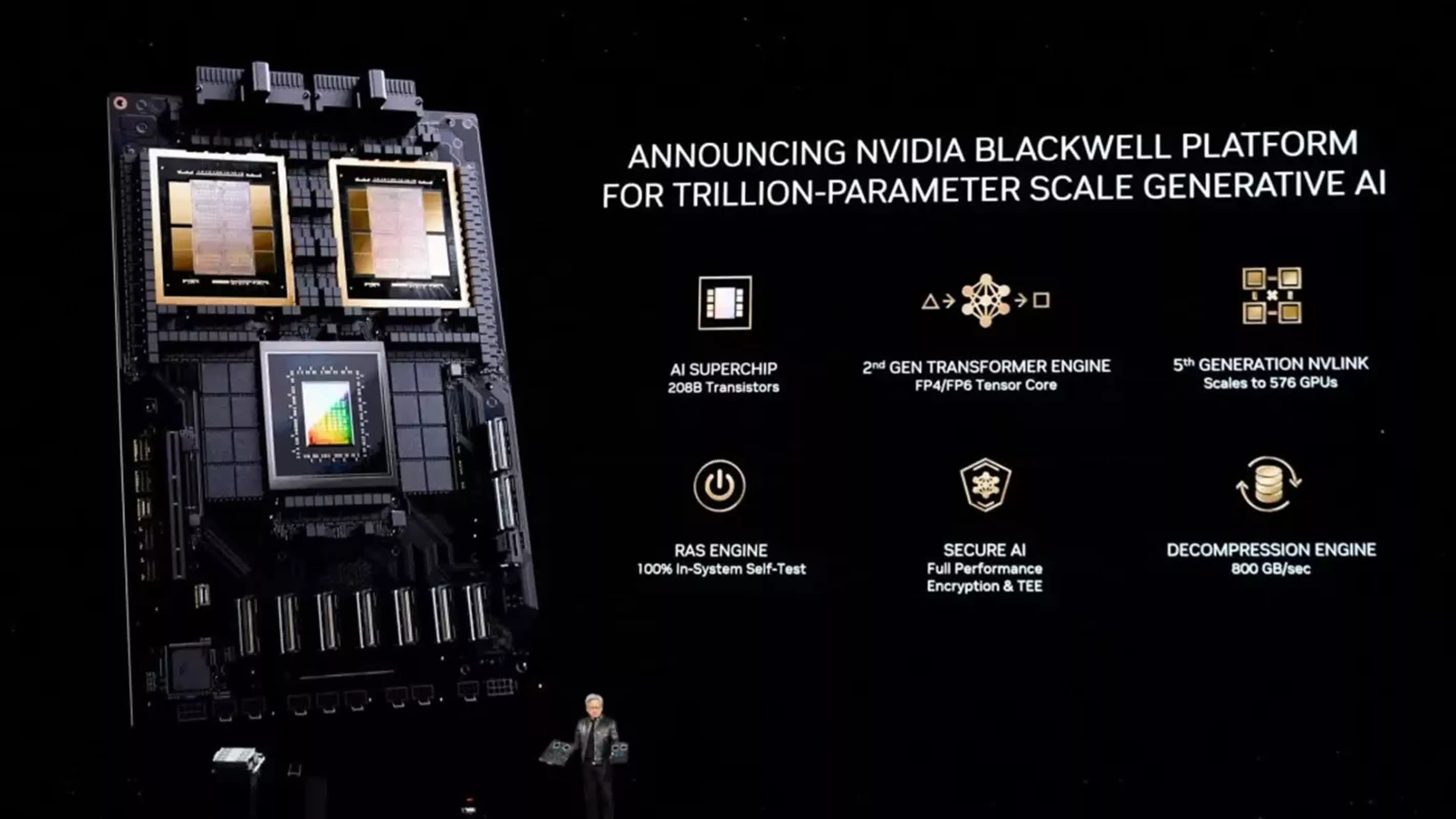
Recap: Nvidia CEO Jensen Huang addressed concerns about the company’s demand for advanced packaging from TSMC earlier this week, clarifying that while their technological needs are evolving, overall demand remains robust. Specifically, Nvidia is transitioning from CoWoS-S to CoWoS-L, representing a significant advancement in its chip architecture as well as a major shift for TSMC.
Speaking on the sidelines of an event hosted by chip supplier Siliconware Precision Industries in Taichung, Taiwan, Huang explained the transition in Nvidia’s chip packaging requirements. “As we move into Blackwell, we will use largely CoWoS-L. Of course, we’re still manufacturing Hopper, and Hopper will use CoWoS-S. We will also transition the CoWoS-S capacity to CoWoS-L,” he stated.
Huang emphasized that this shift does not indicate a reduction in capacity but rather an increase in capacity for CoWoS-L technology. “So it’s not about reducing capacity. It’s actually increasing capacity into CoWoS-L,” he said.
CoWoS-L (Chip-on-Wafer-on-Substrate with Local Silicon Interconnect) represents a significant advancement over CoWoS-S in terms of performance and efficiency for high-end computing applications like AI and HPC.
The main difference between the two lies in the incorporation of Local Silicon Interconnect (LSI) chips for die-to-die connections. This seemingly small change enables a dramatic increase in interconnect density, directly translating into improved bandwidth capabilities. The technology can also potentially support up to 12 HBM3 modules, surpassing the capabilities of CoWoS-S.
Huang’s comments were in response to recent speculation about Nvidia potentially reducing orders from TSMC. Tech analyst Ming-Chi Kuo had reported at one point that Nvidia was shifting its focus to the newer CoWoS-L technology, which could have implications for suppliers. Additionally, some Taiwanese media outlets suggested that Nvidia was cutting CoWoS-S orders from TSMC, potentially impacting the chip foundry’s revenue.
These concerns may have some merit. While Nvidia’s overall demand from TSMC remains robust, the shift to CoWoS-L is prompting TSMC to adapt its production capabilities.
TSMC is expected to double its CoWoS production capacity by 2025, with Nvidia projected to occupy more than half of this capacity. However, Nomura Securities projects that Nvidia’s reduction in CoWoS-S orders could lead to a 1% to 2% decrease in TSMC’s revenue, and some analysts predict that Nvidia might cut CoWoS-S orders at TSMC by as much as 80%.
Meanwhile, other players in Nvidia’s supply chain may also feel the effects as demand for CoWoS-S packaging decreases.
In the broader context, Nvidia’s shift to CoWoS-L is likely to accelerate the adoption of advanced packaging technologies across the semiconductor industry, setting new benchmarks for high-performance AI chips.












5 Amazing Benefits Of Stacking Toy

Nordic founders are taking bigger swings, and it’s paying off

5 Apps To Speed Up Your Google TV Device

Trump threatens ABC News for reporter’s questions on his family business in Saudi Arabia, Khashoggi’s murder and Epstein files

The Best Sunglasses for Travel + Must Have Accessories » Local Adventurer » Travel Adventures in Las Vegas + World Wide

This Silent Habit Might Be Sabotaging Your Career

The Four Types of Happiness: Which One Are You Living In?

Halloween Events in London 2025

Join the peaceful demonstrations for democracy

Cute and Thankful Sayings for the People You Love

Croatia to reintroduce compulsory military draft as regional tensions soar

Singapore Airlines CEO set to join board of Air India, BA News, BA

Supernatural Season 16 Revival News, Cast, Plot and Release Date

How Your Contact Center Can Become A Customer Engagement Center

Bangladeshi police agents accused of selling citizens’ personal information on Telegram

Google Pixel 9 Pro vs Samsung Galaxy S25 Ultra: Camera Comparison Review

The Criterion Collection announces November 2024 releases, Seven Samurai 4K and more

Fallout Season 2 Potential Release Date, Cast, Plot and News

15 of the Best Trike & Tricycles Mums Recommend

17 Signs You Travel A Lot
-
 Breaking News2 years ago
Croatia to reintroduce compulsory military draft as regional tensions soar
-
 Destination1 year ago
Singapore Airlines CEO set to join board of Air India, BA News, BA
-
 Gadgets1 year ago
Supernatural Season 16 Revival News, Cast, Plot and Release Date
-
 Productivity2 years ago
How Your Contact Center Can Become A Customer Engagement Center
-
 Tech News2 years ago
Bangladeshi police agents accused of selling citizens’ personal information on Telegram
-
 Gadgets10 months ago
Google Pixel 9 Pro vs Samsung Galaxy S25 Ultra: Camera Comparison Review
-
 Gaming2 years ago
The Criterion Collection announces November 2024 releases, Seven Samurai 4K and more
-
 Gadgets10 months ago
Fallout Season 2 Potential Release Date, Cast, Plot and News