
Breaking News
Chile Declares Curfew as Power Outage Sweeps Country

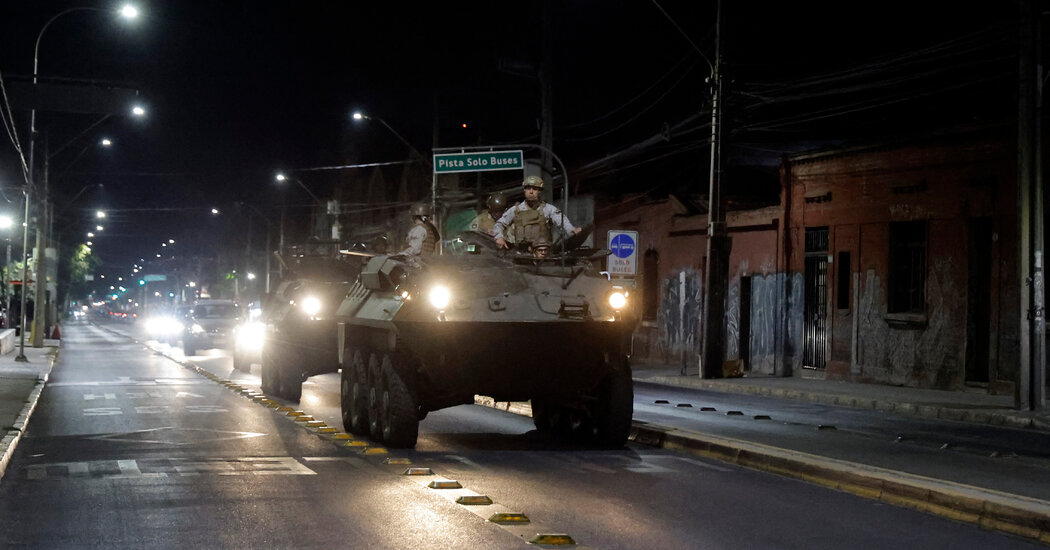
Chile’s government implemented a curfew on Tuesday and deployed the army and national police officers to monitor the streets following a widespread blackout that left most of the country without electricity.
The extensive power outage, which began in the afternoon, affected eight million households in the country of 19 million people. The impacted area stretched 600 miles from Arica in the north to Los Lagos in the south, disrupting daily life and causing chaos in Santiago.
By midnight, power had been restored to 90 percent of residential consumers, with officials assuring that electricity would be fully restored by dawn.
The government announced a curfew from 10 p.m. to 6 a.m. in the affected regions, with schools being closed on Wednesday affecting around 300,000 students.
“Today has been a challenging day for millions of our citizens,” stated Gabriel Boric, the president, during a press conference on Tuesday night.
As authorities worked to restore power, malfunctioning traffic lights in Santiago led to traffic congestion, and commuters were evacuated from the subway system, causing overcrowding on replacement buses.
“People were running everywhere trying to catch the buses,” recounted Patricio Rodriguez, 35. “There was a sense of desperation to get home.”
Mr. Rodriguez had to walk nine miles to reach his aunt’s house amidst the chaos. “People were driving against traffic on the main roads, it was total chaos,” he described. “It felt like a lawless situation, almost like the Wild West.”
President Boric cautioned that the recovery process was slow and unstable, emphasizing the precarious nature of the situation.
He criticized the power companies for the outage and delay in restoring electricity, calling the situation “outrageous.” The outage was attributed to a transmission system failure.
Military personnel in trucks were dispatched to enforce the curfew in affected areas, while the national police managed traffic and patrolled the streets. Helicopters circled Santiago to monitor the situation.
The national police reported on social media that they rescued individuals stuck in elevators and trapped in stores with automatic gates.
In certain regions, residents faced a lack of drinking water. Emergency services, hospitals, prisons, and airports operated on backup power systems and generators, as per the national disaster agency.
Despite being one of the wealthiest nations in Latin America, Chile continues to grapple with deep-rooted inequality, stemming from the uneven distribution of economic growth and resources.
This disparity led to widespread protests in 2019, contributing to the election of President Boric in 2021. His administration initiated a process to draft a new constitution, aiming to address the country’s social issues and outdated policies.
Although the proposed constitution was rejected by voters in 2022, President Boric continues to advocate for improved services and opportunities for the majority of Chileans.












5 Amazing Benefits Of Stacking Toy

Nordic founders are taking bigger swings, and it’s paying off

5 Apps To Speed Up Your Google TV Device

Trump threatens ABC News for reporter’s questions on his family business in Saudi Arabia, Khashoggi’s murder and Epstein files

The Best Sunglasses for Travel + Must Have Accessories » Local Adventurer » Travel Adventures in Las Vegas + World Wide

This Silent Habit Might Be Sabotaging Your Career

The Four Types of Happiness: Which One Are You Living In?

Halloween Events in London 2025

Join the peaceful demonstrations for democracy

Cute and Thankful Sayings for the People You Love

Croatia to reintroduce compulsory military draft as regional tensions soar

Singapore Airlines CEO set to join board of Air India, BA News, BA

Supernatural Season 16 Revival News, Cast, Plot and Release Date

How Your Contact Center Can Become A Customer Engagement Center

Bangladeshi police agents accused of selling citizens’ personal information on Telegram

Google Pixel 9 Pro vs Samsung Galaxy S25 Ultra: Camera Comparison Review

The Criterion Collection announces November 2024 releases, Seven Samurai 4K and more

Fallout Season 2 Potential Release Date, Cast, Plot and News

15 of the Best Trike & Tricycles Mums Recommend

17 Signs You Travel A Lot
-
 Breaking News2 years ago
Croatia to reintroduce compulsory military draft as regional tensions soar
-
 Destination1 year ago
Singapore Airlines CEO set to join board of Air India, BA News, BA
-
 Gadgets1 year ago
Supernatural Season 16 Revival News, Cast, Plot and Release Date
-
 Productivity2 years ago
How Your Contact Center Can Become A Customer Engagement Center
-
 Tech News2 years ago
Bangladeshi police agents accused of selling citizens’ personal information on Telegram
-
 Gadgets10 months ago
Google Pixel 9 Pro vs Samsung Galaxy S25 Ultra: Camera Comparison Review
-
 Gaming2 years ago
The Criterion Collection announces November 2024 releases, Seven Samurai 4K and more
-
 Gadgets10 months ago
Fallout Season 2 Potential Release Date, Cast, Plot and News